

Key Takeaways
- The AI confidence gap, also called the AI trust gap, is measurable, not anecdotal. AvePoint's 2026 State of AI report found that 72% of “very confident” organizations and 62% of “extremely confident” organizations still had an AI-related unauthorized access incident in the past year.
- Confidence tracks policy intent; incidents track operational reality. A published AI policy is not the same as enforced, monitored AI usage.
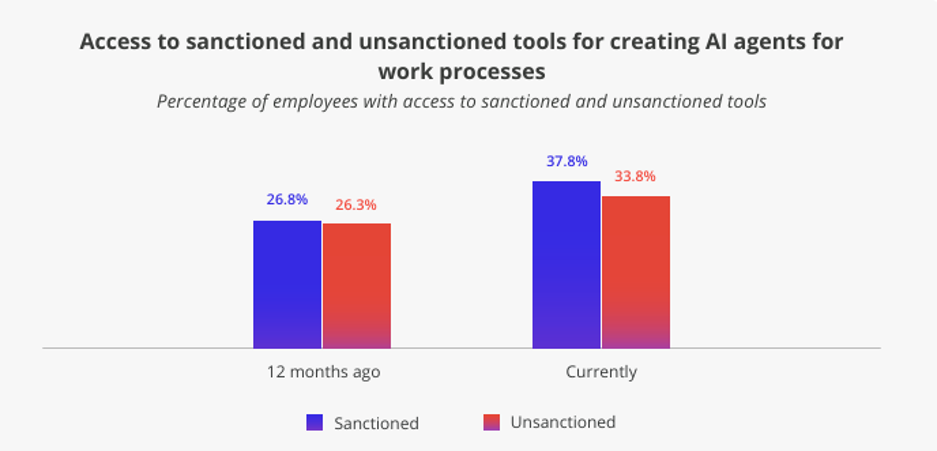
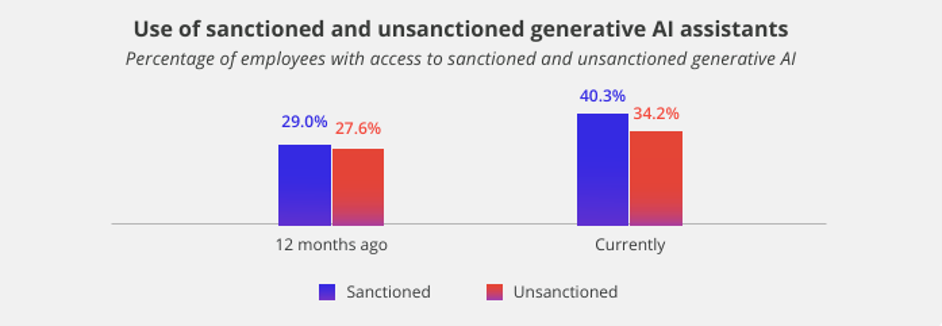
- Visibility is collapsing as autonomy rises. 21.1% of organizations don't know whether unsanctioned tools are being used to create AI agents, and 17.6% don't know for generative AI, nearly triple 2025's 6.3%.
- Multicloud environments compound the gap. AI guardrails that are strong in Microsoft 365 may not exist yet in Google Workspace or Salesforce.
- AI agents raise the stakes beyond copilots. Agents that take autonomous action can create incidents before anyone reviews their behavior.
- Readiness beats policy volume. Tier 3 organizations measure AI security through continuous monitoring and tested guardrails, not the number of policies on file.
- Closing the gap requires ownership. A named AI risk owner with authority across security, IT, and the business is a precondition for real readiness.
What Is the AI Confidence Gap?
The AI confidence gap, sometimes called the AI trust gap, is the difference between an organization's perceived AI security posture and its actual operational exposure. It happens when policy intent, like an acceptable use policy or an approved tool list, gets mistaken for enforced practice, leaving real gaps in visibility, monitoring, and control undetected until an incident occurs.
AvePoint's 2026 State of AI report surveyed 750 respondents with direct responsibility for information management, data security, or AI programs to separate what organizations believe about their AI posture from what is actually happening inside their environments. The gap between the two is wide enough that confidence without operational value can become a risk indicator. More than four in five respondents said they were very or extremely confident in their ability to prevent unauthorized AI data access, up from 75.5% in 2025. Yet among organizations describing themselves as “very confident,” 72% still experienced an AI-related unauthorized access incident in the past 12 months. Among “extremely confident” organizations, the figure was 62%.
For security and compliance leaders, that number reframes the question. The relevant metric is no longer whether an AI policy exists, but whether the organization actually knows what is happening with AI across every cloud environment it runs.
Why Do Confident Organizations Still Get Breached by AI?
Confidence and incident rates measure two different things. Confidence reflects policy intent: an acceptable use policy exists, a list of sanctioned tools has been published, training has been delivered. Incidents reflect operational reality: what employees and AI agents actually access, run, and share day to day, whether or not it was approved.
The paradox holds because most organizations build AI governance the same way they built early cloud governance: policy first, enforcement later. A security leader can point to a signed AI acceptable use policy and a shortlist of approved copilots and still have no visibility into the AI browser extensions, personal AI accounts, or third-party AI plug-ins employees added to sanctioned SaaS tools last quarter.
The 2026 State of AI report puts a number on that blind spot: 21.1% of organizations do not know whether employees are using unsanctioned tools to create AI agents, and 17.6% do not know whether unsanctioned generative AI tools are in use at all, a figure that has nearly tripled from 6.3% in 2025. An organization cannot secure AI activity it cannot see, no matter how mature its written policy looks on paper.
Learn How to Build AI Trust
Join top AI Leaders at AvePoint's AI Virtual Summit on September 10 to see how they scale their organizations with AI while maintaining trust.
What Is the Difference Between an AI Policy and Operational AI Readiness?
An AI policy defines intent: what tools are approved, what data can be shared, and who is accountable. Operational AI readiness measures whether that intent is enforced in practice, including usage visibility, guardrail verification, and the ability to detect and respond to AI-related incidents in real time.
| Policy Intent (What Creates Confidence) | Operational Reality (What Actually Determines Risk) |
| An acceptable use policy is published | Usage is monitored against the policy in real time, across every cloud |
| A shortlist of sanctioned AI tools exists | All AI tool usage, sanctioned and shadow, is discoverable |
| Guardrails are documented in a policy | Guardrails are tested and verified to actually block or flag risky actions |
| Training was delivered once | Behavior is measured continuously, not assumed after a single session |
| An AI risk owner is named | Cross-functional incident response for AI events is rehearsed, not theoretical |
| Employees understand what to do if AI fails | Employees know exactly where to report, escalate, and respond to AI incidents |
This distinction matters most when an auditor, regulator, or board member asks for evidence rather than assurances. Security and AI governance leaders are increasingly judged on defensibility: the ability to show, not just state, that AI risk is identified, monitored, and controlled. Policy intent alone rarely survives that test.
What Are the Most Common Blind Spots Behind False AI Security Confidence?
False AI security confidence usually traces back to five recurring blind spots: no centralized visibility into AI usage, guardrails that were never tested under real conditions, policies that exist without enforcement mechanisms, shadow AI tools operating outside IT's view, and no dedicated AI incident response plan.
- No usage visibility. Security teams cannot list every AI tool touching company data, let alone what data those tools can access.
- Unverified guardrails. Guardrails were configured once at rollout and never tested against a real prompt-injection or data-exfiltration attempt.
- Policy without enforcement. An acceptable use policy exists, but nothing technical stops employees from using unapproved tools.
- Undetected shadow AI. Personal AI accounts, browser extensions, and embedded AI features inside everyday SaaS apps operate invisibly to IT and security.
- No AI-specific incident response plan. When an AI-related incident happens, teams improvise instead of following a rehearsed playbook, extending time to detect and contain.
What Does the AI Confidence Gap Look Like Across Microsoft 365, Google Workspace, and Other SaaS Environments?
The AI confidence gap widens fastest in the cloud collaboration tools employees already use daily. Microsoft 365 Copilot, Google Workspace's Gemini, Salesforce Einstein, and dozens of embedded AI features can all surface sensitive content the moment they are switched on, often exposing years of oversharing and stale permissions that were previously invisible.
Copilots based on retrieval augmentation generation (RAG), like Microsoft 365 Copilot, do not create new risk so much as reveal risk that was already there. A Copilot deployment in Microsoft 365 will summarize and surface any file, chat, or site that a user's existing permissions technically allow it to reach — including SharePoint sites, Teams channels, and shared mailboxes accumulated over years of loose access provisioning. The same dynamic plays out when Gemini goes live inside Google Workspace or when Einstein features activate inside Salesforce: AI does not check for oversharing; it inherits it.
Multicloud organizations feel this gap most acutely, because AI confidence is rarely assessed consistently across environments. A security team may have strong AI guardrails in Microsoft 365 and none at all in the Salesforce org that a sales team quietly connected to a generative AI plug-in six months earlier.
How Does the AI Confidence Gap Show Up in Agentic AI and Copilot Deployments?
Agentic AI widens the confidence gap because agents act, not just answer. A chatbot that gives a wrong answer creates a support ticket. An AI agent with standing permissions that takes an unreviewed action, such as moving a file, sending an email, or updating a record, can create an incident before anyone notices.
The same organizations reporting high AI security confidence are, in many cases, the ones deploying agents fastest. Agent sprawl compounds the confidence gap because every new agent inherits an identity, a set of permissions, and a scope of autonomous action, and most organizations have no central inventory of what agents exist, what they can touch, or who owns them. This is a distinct and fast-growing category of AI risk, separate from copilot governance, and it is why agent-specific visibility and identity management are becoming their own discipline inside AI security programs.
How Can Organizations Close the AI Confidence Gap?
Organizations close the AI confidence gap by replacing policy-based confidence with operational readiness: full visibility into AI usage, verified guardrails, clear ownership, continuous monitoring, and a tested incident response process, then re-measuring confidence against outcomes instead of intentions.
- Inventory every AI tool actually in use, not just the approved list, across every SaaS and cloud environment.
- Test guardrails against real scenarios instead of trusting default configurations.
- Assign a named owner for AI risk with authority across security, IT, and the business units deploying AI.
- Monitor AI usage and data access continuously, not through periodic manual reviews.
- Rehearse an AI-specific incident response plan before an AI-related breach forces you to write one in real time.
These five steps map to three broad readiness tiers:
| Tier | Readiness Profile | What It Looks Like |
| Tier 1: Reactive | Confidence is based on policy alone | An AI acceptable use policy exists; usage visibility and enforcement are largely manual or absent. |
| Tier 2: Managed | Confidence is partially verified | Sanctioned AI tools are monitored; shadow AI and cross-cloud gaps still exist. |
| Tier 3: Proactive | Confidence is continuously measured | AI usage, guardrails, and agent activity are monitored in real time across every cloud, with a rehearsed incident response plan. |
What Does an AI-Ready Organization Look Like Compared to a Confident-but-Exposed One?
A confident-but-exposed organization equates having an AI policy with being protected. An AI-ready organization treats policy as a starting point and measures readiness by what it can see, verify, and respond to in practice, across every cloud environment and every AI agent, not just the tools it officially sanctioned.
| Confident-but-Exposed Organization | Operationally AI-Ready Organization |
| Trusts that a published policy is being followed | Verifies AI usage against the policy continuously |
| Knows about sanctioned AI tools only | Has visibility into sanctioned and shadow AI tools alike |
| Assumes guardrails work because they were configured | Tests guardrails against real prompt-injection and exfiltration scenarios |
| Treats AI risk as an IT or security-only issue | Assigns AI risk ownership across security, IT, and the business |
| Responds to AI incidents ad hoc | Follows a rehearsed, AI-specific incident response plan |
What Best Practices Reduce the AI Confidence Gap?
Organizations that close the AI confidence gap fastest treat AI security as a continuous discipline, not a one-time policy rollout. That means pairing every AI policy with an enforcement mechanism, reviewing AI tool sprawl on a fixed cadence, and reporting AI readiness to leadership using the same rigor as any other audit-facing control.
- Pair every policy with enforcement. Do not publish an AI acceptable use policy without a technical control that can detect violations.
- Review AI tool sprawl quarterly. Shadow AI accumulates continuously, so audit cadence needs to match.
- Report AI readiness like any other control. Give the board and auditors evidence, not assurances.
- Extend governance to AI agents, not just copilots. Agents need their own identity and permission review process.
- Test guardrails, do not just configure them. Run controlled exercises to confirm guardrails hold under real conditions.
Frequently Asked Questions
Is the AI confidence gap the same as the AI trust gap?
Yes. AI trust gap and AI confidence gap describe the same finding: Organizations that trust their AI security posture are not necessarily more protected than those that do not. AvePoint's research uses “confidence” because that is the specific term respondents were asked about.
Why do organizations that feel confident about AI security still get breached?
Confidence is typically built on policy intent, such as a published acceptable use policy, whereas incidents result from operational realities, including shadow AI tools, unmonitored usage, and unverified guardrails. The two rarely move together without deliberate measurement.
What is the difference between an AI acceptable use policy and AI operational readiness?
An AI acceptable use policy states what is allowed. Operational AI readiness measures whether that policy is actually enforced, monitored, and verified across every cloud environment an organization runs.
What is shadow AI, and how does it contribute to the AI confidence gap?
Shadow AI refers to AI tools, browser extensions, and embedded features that employees use without formal IT or security approval. It contributes to the AI confidence gap because organizations cannot secure or govern AI activity they cannot see.
What does the AI confidence gap mean for Microsoft 365, Google Workspace, and other SaaS environments?
AI copilots and assistants such as Microsoft 365 Copilot, Google Workspace's Gemini, and Salesforce Einstein inherit existing file and data permissions the moment they are enabled, often surfacing years of oversharing that organizations did not know existed.
How does AI agent adoption affect the AI confidence gap?
AI agents widen the confidence gap because they can take autonomous action, not just generate answers, so an ungoverned agent with standing permissions can cause an incident before a human ever reviews its behavior.
What is a good AI security readiness benchmark for most organizations?
Most organizations should aim for Tier 2 or Tier 3 readiness: Continuous monitoring of sanctioned and shadow AI usage, tested guardrails, and a rehearsed AI-specific incident response plan, rather than relying on policy alone.
How often should organizations reassess AI security readiness?
Organizations should reassess AI security readiness quarterly at minimum, since shadow AI tools and agent deployments accumulate continuously between review cycles.
What is the relationship between AI governance and AI confidence?
AI governance provides the structure, ownership, and controls that make confidence measurable instead of assumed. Without governance, confidence tends to reflect policy intent rather than verified outcomes.
How can organizations measure operational AI readiness instead of just AI policy coverage?
Organizations measure operational AI readiness by tracking usage visibility across every cloud, guardrail test results, incident response rehearsal outcomes, and AI agent inventories, rather than counting policies published or training sessions completed.
Related Questions
→ What is enterprise AI governance?
→ What is AI agent management, and why does it matter?
→ What is shadow AI, and how do you detect it?
→ What is AI agent observability?
The AvePoint Confidence Platform gives security and compliance teams a single, defensible view of AI usage, data exposure, and agent activity across Microsoft 365, Google Workspace, Salesforce, and other cloud environments, so AI confidence is something you can prove, not just report. For organizations managing AI agents specifically, AgentPulse extends that visibility to agent identity, permissions, and behavior.

Jared Matfess is an AI Architect at AvePoint with over two decades of industry and consulting experience. A Microsoft MVP and a recently published author, he loves solving business problems with technology. He frequently speaks at industry events and conferences, inspiring teams to realize the full potential of their investment in Microsoft technologies.