

Key Takeaways
- Managed service providers replace reactive support with ongoing, proactive operations.
- The strongest MSPs combine infrastructure support, cybersecurity, backup, and cloud administration.
- Multitenant management and standardization are essential for a profitable MSP scale.
- Backup and security services do more than protect clients. They also support margin and retention.
- AI can improve MSP efficiency, but governance and human oversight still matter.
A server outage, a failed backup, or a misconfigured tenant can stall business fast. That pressure explains why managed service providers have moved from optional support partners to strategic operators. The modern MSP is not just a help desk with remote access. It is a service model built around prevention, consistency, and accountability across infrastructure, security, data protection, and cloud operations.
What Is a Managed Service Provider?
How the MSP Model Works
A managed service provider (MSP) is a third-party partner that proactively manages IT infrastructure, cybersecurity, cloud platforms, backup, and end-user support through a recurring subscription model. Unlike traditional break/fix IT support, MSPs continuously monitor and maintain client environments to reduce downtime, strengthen security, and support long-term business growth.
That demand is reflected in market scale, too. In a 2025 UK study commissioned by the Department for Science, Innovation and Technology, researchers identified 12,867 active MSPs, employing 343,762 people and generating an estimated £51 billion in revenue.
What MSPs Manage Every Day
Daily MSP work usually includes endpoint and server monitoring, user support, patching, identity administration, security oversight, backup management, and reporting. Many providers also handle Microsoft 365 administration, policy baselining, and multitenant operations for clients that do not have the time or in-house depth to manage those environments consistently. The scope varies, but the operating principle stays the same: reduce risk through structured, ongoing service delivery. For clients, that often means fewer skipped tasks, fewer undocumented changes, and fewer surprises during audits, outages, or employee transitions.
How MSPs Differ From Traditional IT Support
Traditional support often starts with a ticket. MSP support starts with a process. A mature provider documents standards, tracks recurring work, measures against service commitments, and uses automation to prevent repeated issues. That shift matters because clients do not buy managed services only to fix isolated problems. They buy them to gain steadier operations, stronger security, and a clearer path to scale. In practical terms, the difference is less about who answers the phone and more about how predictably the environment is maintained over time.
Types of Managed Service Providers
Not all MSPs operate in the same way. While many providers offer broad IT management, others specialise in specific service areas or industries. Understanding the main types of MSPs helps buyers match their needs with the right partner model and helps providers position their services more precisely.
Security MSPs (MSSPs)
Managed security service providers focus on threat detection, identity protection, and compliance. They typically operate security operations centres, manage firewalls and intrusion prevention systems, conduct vulnerability assessments, and provide incident response. For organisations with sensitive or regulated data, an MSSP offers deeper security specialisation than a general-purpose MSP.
IT Infrastructure MSPs
IT infrastructure MSPs manage endpoints, servers, networks, and user support. They handle the physical and virtual backbone of client environments, ensuring uptime, performance, and reliability. This category is common among providers that serve organisations with complex on-premises or hybrid infrastructures, such as manufacturing firms, retail operations, or large corporate offices.
Cloud MSPs
Cloud MSPs specialise in Microsoft 365, Azure, and SaaS platform management. They help organisations migrate to, configure, and continuously operate cloud environments. Their services often include tenant administration, licence management, identity governance, and cloud security. As cloud adoption accelerates, this category continues to grow in both demand and strategic importance.
Vertical MSPs
Vertical MSPs serve industries such as healthcare, legal, or financial services. They bring domain-specific expertise, including knowledge of industry regulations, compliance frameworks, and specialised workflows. This focus allows them to tailor service delivery to the unique operational and regulatory requirements of their target sectors.
Microsoft-Focused MSPs
Microsoft-focused MSPs concentrate on Microsoft 365 administration, governance, backup, and security. They build deep competency across the Microsoft ecosystem, including Exchange Online, SharePoint, Teams, Intune, and Azure Active Directory. For organisations heavily invested in Microsoft, these providers offer the operational depth and platform fluency needed to manage complex, multi-workload environments at scale.
Why Businesses Work with MSPs
Predictability, Uptime, and Operational Focus
Many organizations choose an MSP because internal teams are already stretched across support, projects, and compliance work. Managed services create structure around the tasks that most often get deferred, including patching, device hygiene, monitoring, and routine recovery checks. When that work happens consistently, outages drop, response becomes faster, and internal teams can focus on projects that move the business forward. That operating consistency is often the first major value clients notice, especially in environments that have grown quickly without much standardization.
One reason MSP demand keeps growing is security complexity. In the 2025 Barracuda survey, 52% of organizations said they want MSPs to help them manage a spiraling number of disconnected security tools and vendors.
Specialized Expertise Without a Larger Headcount
An MSP gives clients access to skills they may not be able to justify hiring internally. That can include cloud architecture, email security, backup design, endpoint hardening, or Microsoft 365 tenant administration, and workspace management for AI readiness. The value is not only technical depth. It is the ability to apply expertise across environments with repeatable standards, documentation, and escalation paths. For many buyers, this is the most realistic way to gain enterprise-grade operational discipline without building a larger in-house team.
Support for Growth, Change, and Complexity
Managed services also help during periods of change. A merger, tenant expansion, office move, compliance initiative, or modernization project often creates more operational complexity than a lean IT team can absorb. MSPs can stabilize the day-to-day layer while the client handles business transition. In that sense, an MSP is not merely a vendor. It becomes an operational extension of the client team. This is especially valuable when the organization needs continuity now but will not have time to rebuild process and governance until later.
What Services MSPs Commonly Provide
Cybersecurity, Monitoring, and Response
Security is now central to the MSP model. Clients expect more than device management or ticket resolution. They expect continuous monitoring, hardening, alert triage, endpoint protection oversight, identity controls, and practical guidance on reducing security risk. Some providers stay broad. Others specialize more deeply in managed security services, but even general MSPs now need a strong cybersecurity backbone to remain credible. A provider that cannot connect support, access, policy, and recovery into one operating story will struggle to stand out.
Cloud, Microsoft 365, and Multitenant Management
Cloud operations are another core service area. MSPs often manage Microsoft 365 users, groups, policies, licenses, and collaboration controls across many client tenants at once. That work demands tools built for multitenant management, delegated access, and standardized baselines. Without those controls, even minor changes become hard to scale, and inconsistency starts to erode service quality. In a multitenant model, discipline matters as much as technical knowledge because one unmanaged exception can create confusion across several clients.
Microsoft 365 Administration for MSPs
Microsoft 365 has become a core service layer for modern MSPs, combining productivity, identity, security, and collaboration into a single environment that requires continuous management and governance. For providers, Microsoft 365 administration is not a single task but an ongoing discipline that spans the full lifecycle of the client relationship. Key areas of Microsoft 365 administration for MSPs include:
- User provisioning and lifecycle management – Onboarding, offboarding, and managing user accounts, groups, and roles across tenants.
- Licence management and optimisation – Assigning, tracking, and right-sizing licences to control costs and avoid over-provisioning.
- Microsoft Teams governance – Managing team creation policies, guest access, retention settings, and channel structure.
- SharePoint administration – Configuring site permissions, storage limits, sharing policies, and content architecture.
- Identity and access management – Enforcing conditional access, multifactor authentication, privileged identity controls, and single sign-on configurations.
- Backup and recovery – Protecting Exchange, SharePoint, OneDrive, and Teams data with reliable backup, restore testing, and retention policy management.
- Security baselines and policy enforcement – Deploying and monitoring security configurations across workloads to prevent drift and maintain a strong security posture.
When managed well, Microsoft 365 administration becomes a foundation for broader service expansion, including compliance support, cloud security, and AI readiness. Providers that master this layer are better positioned to scale, retain clients, and differentiate in a competitive market.
Backup, Recovery, and Business Continuity
Backup remains one of the most commercially important and operationally sensitive managed services. Clients do not judge backup only by whether a job is completed. They judge it by whether data can be restored when business pressure is high. Strong MSPs treat backup, recovery testing, retention policy, and disaster recovery planning as connected disciplines. That posture supports resilience, and it also creates durable recurring revenue for the provider. It also reframes backup from a checkbox product into a trust-building service tied directly to business continuity.

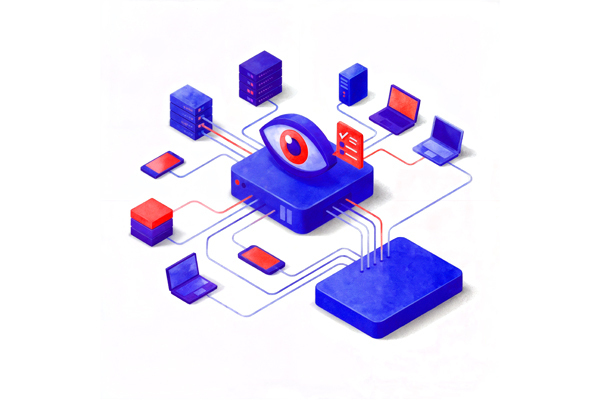
Centralized Multi-Tenant Management for Scalable Partner Growth
Automate governance, secure SaaS environments, and standardize operations – optimizing scale, reducing complexity, and turning data protection into a growth engine for revenue
The MSP Tool Stack That Makes Scale Possible
RMM, PSA, and Automation
The modern MSP stack usually starts with remote monitoring and management tools, professional services automation, scripting, and alerting. Those systems give providers visibility into devices, tickets, asset data, policy status, and recurring work. On their own, however, tools do not create efficiency. Efficiency comes from pairing the platform stack with standard operating procedures, sensible thresholds, and disciplined service design. A cluttered stack without process will only move operational chaos faster.
Multitenant Management and Delegated Administration
An MSP managing 100+ Microsoft 365 tenants cannot operate efficiently by switching between separate admin portals. Without centralised management, technicians lose time, policies drift across environments, and security inconsistencies increase.
Multitenant management allows MSPs to centrally administer multiple client environments from a single interface while maintaining separation between each tenant. Through a single pane of glass, providers can manage users, devices, policies, and configurations across hundreds—or even thousands—of clients. This improves operational efficiency, standardises service delivery, and enables automation of routine tasks, helping MSPs complete work in minutes that once took hours while scaling more profitably.
What to Look for in an MSP Platform
The best platform is not the one with the longest feature list. It is the one that reduces manual work while preserving control. MSPs should look for centralized reporting, tenant isolation, role-based access, workflow automation, and integrations that support delivery, billing, and security operations. The goal is straightforward: less swivel-chair administration, fewer avoidable errors, and cleaner service execution. If a tool saves clicks but weakens auditability, it is saving the wrong thing.
AvePoint Elements: Multi‑Tenant Management at Scale for MSPs
Manage, optimize, and secure your customers' IT environments with our AI-powered, unified platform, driving greater MSP profitability.
Backup, Security, and Resilience as Growth Engines
Why Backup Is More Than a Commodity
Backup is often treated like a baseline requirement, but it has turned into one of the clearest trust markers in the MSP relationship. A provider that can explain recovery objectives plainly, prove restore readiness, and protect data across SaaS, infrastructure-as-a-service (IaaS), platform-as-a-service (PaaS), and endpoint environments stands apart from providers that sell backup as a checkbox. That difference matters to clients and margins. It also creates a more credible path into adjacent conversations about retention, compliance, and cloud resilience.
The Rise of the Security-First MSP
Security-first positioning is becoming a practical differentiator, not a marketing slogan. Clients want providers that can reduce exposure, not just react to incidents. That means enforcing standards, watching for drift, tightening identity controls, and understanding how backup, monitoring, and policy management work together. Providers that build security into every service layer are typically better positioned to protect margins because they are easier to trust and harder to replace. The service promise becomes stronger when protection is embedded across operations, not sold as a premium add-on.
Resilience Drives Retention and Expansion
When an MSP helps a client recover quickly, prevent repeat incidents, or simplify a messy tenant environment, the provider earns more than a renewal. It earns expansion space. Backup, security, and resilience services often open the door to adjacent work, including compliance support, Microsoft 365 governance, lifecycle management, and cloud optimization. This is one reason mature MSPs package resilience as a strategic service line rather than an isolated add-on. Clients remember the provider that made recovery calm instead of chaotic.
Real-World MSP Outcomes
The best way to understand the impact of modern MSP platforms is through measurable results. The following examples show how two providers transformed their operations, improved security, and delivered better outcomes for their clients.
How Indeno GmbH Cut Tenant Provisioning From 30 Hours to Under One
Indeno GmbH, an IT modernization partner headquartered in Graz, Austria, needed a way to bring transparency and consistency to security configurations scattered across its clients' Microsoft 365 workloads. After adopting AvePoint Elements and its Baseline Management capability, Indeno GmbH was able to centrally manage its own security baselines, roll them out across multiple clients, and automatically monitor for configuration drift. The impact was immediate: tenant provisioning dropped from roughly 30 hours of work to under one hour, with as little as 30 minutes of active engineering effort. New Microsoft 365 tenants now launch with a Secure Score above 85%, reflecting a measurable improvement in both operational efficiency and security quality.
How HAFN IT Built a Scalable Managed Services Operating Model
HAFN IT, a Hamburg-based specialist in standardized Microsoft 365 and Azure deployments for German SMEs, needed a platform that could embed its best practices into a repeatable, scalable service model. With AvePoint Elements, HAFN IT replaced fragmented scripts and native tooling with a centralized operating platform for tenant management, baseline configuration, and governance. The result: less time on repetitive manual tasks, reduced error rates, and noticeable relief for the team. Technicians now focus on new functionalities, configuration improvements, and the continuous development of standards, which improves delivery quality and increases employee engagement. HAFN IT customers benefit as well, with faster imple
How MSPs Build Margin, Retention, and Growth
Recurring Revenue Starts With Standardization
Managed services work best when delivery is standardized enough to scale, flexible enough to adapt, and structured to support recurring revenue over time. Standard operating procedures, service tiers, onboarding templates, and documented exclusions protect margin by reducing one-off work. They also improve the client experience because expectations stay clear. When every new environment requires a completely new playbook, profitability slips quickly. A well-structured offer lets teams deliver consistently without forcing every client into a rigid mold that ignores business reality.
Client Retention Is Operational, Not Theatrical
Retention is rarely won through grand gestures. It is won through consistency. Clients stay when support is responsive; reporting is useful, recommendations make sense, and service reviews focus on outcomes instead of jargon. Mature providers also examine the early part of the relationship carefully. Onboarding, documentation cleanup, and access setup often decide whether the client sees the MSP as organized or chaotic. A thoughtful onboarding motion is often the first proof that the provider will manage complexity rather than add to it.
Partnership Ecosystems Expand Delivery Options
Distributors, vendor programs, and partner ecosystems can help MSPs broaden what they offer without rebuilding everything internally. The strongest partnerships support training, licensing efficiency, bundled services, and faster deployment. Used well, that ecosystem can improve service depth and open new revenue paths. Used poorly, it adds tool sprawl and operational noise. The deciding factor is whether the partnership simplifies delivery for the team and value for the client. Good partnerships strengthen the core service model rather than distract from it.
How AI Is Changing the MSP Model
Where AI Helps the Most
AI is beginning to change MSP operations in practical ways. It can support alert triage, summarize tickets, surface anomalies, streamline documentation, and improve knowledge retrieval for technicians. Used well, it reduces low-value manual work and helps teams move faster without lowering standards. Used poorly, it adds noise, weakens accountability, or creates bad decisions at scale. The real opportunity is not novelty. It is making recurring operational work more efficient while keeping decision-making visible.
AI in Multitenant and Security Workflows
The most promising MSP use cases sit inside high-volume workflows, especially where teams manage many tenants at once. Examples include identifying policy drifts, detecting unusual access patterns, prioritizing backlog items, and highlighting conditions that need human review. In security operations, AI can help narrow down what deserves urgency. It should not replace oversight, especially where identity, compliance, or recovery actions are involved. Providers that treat AI as an amplifier for sound process will get more value than those chasing full autonomy too early.
Why Governance Still Matters
AI changes the speed of operations, but it does not remove the need for controls. MSPs still need clear ownership, approval thresholds, audit trails, and documented exceptions for automated actions. That is especially true when the workflow touches privileged access, client data, or tenant-wide settings. The providers that use AI responsibly will not be the loudest. They will be the ones that combine speed with visible control. This is where governance becomes a trust signal, not a brake on progress.
MSP vs. SaaS, VARs, and System Integrators
Managed Services vs. SaaS
Software-as-a-service (SaaS) is a delivery model for software. Managed services are an ongoing operating model for outcomes. A client can buy a SaaS tool and still struggle to configure, govern, secure, and maintain it. That gap is where MSPs often create value. They help clients use software consistently, keep environments healthy, and turn tools into stable operations. This distinction matters because software alone rarely solves the process and ownership issues that create operational drag.
MSPs, VARs, and Distributors
A value-added reseller (VAR) usually focuses on reselling technology and layering on services around deployment or support. A distributor helps move products through the channel and may support enablement, training, or procurement efficiency. An MSP can work with both, but its core promise is different. It owns recurring service delivery over time, not just the initial transaction or product relationship. Buyers should understand this difference, so they align expectations with the right partner model.
MSPs and System Integrators
System integrators usually lead large implementation or transformation work. MSPs usually own the operating layer after rollout, although some providers span both areas. The distinction matters because clients often need both: one partner to deliver change, and another to keep the environment stable afterward. Clear positioning helps buyers understand whether they need a project partner, an operating partner, or both. The strongest handoffs happen when implementation decisions are made with long-term operations in mind.
How to Choose or Become an Effective MSP
What Buyers Should Ask Before Signing
A strong MSP relationship starts with precise questions. Buyers should ask how the provider handles onboarding, documentation, escalation, recovery testing, change control, and reporting. They should also ask what is not included. A clean service boundary prevents disappointment later. If the answers are vague, the operational discipline behind the service is vague too. Clarity early saves both sides from escalations that are really expectation problems in disguise.
What New MSPs Need to Build First
New providers often focus first on tools. Tools matter, but service design matters more. Before adding stacks of products, an MSP needs a clear target market, a support model, onboarding checklists, access controls, documentation standards, and a service catalog that can be delivered. Good operations make tools useful. Weak operations make every tool harder to manage. A smaller, cleaner stack paired with strong process will outperform a bigger stack with inconsistent delivery every time.
Why Trust Becomes the Real Differentiator
The MSP market is crowded but trust still narrows the field quickly. Buyers want providers that communicate clearly, own mistakes, understand risk, and treat resilience as a discipline instead of a buzzword. Providers that show this through process, not just claims, are better positioned to win complex accounts, expand over time, and earn long-term referrals. In a market full of similar promises, operational trust is what makes a provider memorable.
The Future of Managed Service Providers
Cloud-First, Security-Led Delivery
The next phase of the MSP market will likely favor providers that combine cloud fluency, security depth, and operational clarity. Clients are not looking for more dashboards. They want fewer blind spots, faster recovery, and better governance across increasingly connected environments. That need strengthens the case for providers that can unify service delivery across data protection, identity, compliance, and productivity platforms. Strategic value grows when the provider can connect the client’s tools to the client’s risk priorities and broader digital transformation goals.
Platform Consolidation and Cleaner Operations
Operational complexity costs a lot. The providers that scale well tend to reduce tool overlap, simplify delivery paths, and invest in platforms that support centralized control across tenants. Consolidation is not only about lowering license spend. It is about reducing friction for technicians and creating cleaner experiences for clients. Simpler operations usually translate into faster response, stronger quality control, and more room for thoughtful advisory work.
The Best MSPs Will Feel Strategic
The strongest providers will continue to look less like outsourced help desks and more like operational advisors with deep execution ability. They will still resolve tickets. They will also shape standards, guide resilience planning, and help clients navigate change across security, cloud, data, and collaboration environments. That is what makes the MSP model durable. The providers that win long term will be the ones that make operational trust feel tangible in day-to-day work.
Operational Trust Is What Makes an MSP Durable
The managed services conversation has matured. Buyers need more than definitions. They need a way to evaluate where MSPs create real operational value, and which capabilities matter most as environments grow more distributed, more cloud dependent, and more security sensitive.
Strong MSPs answer that through execution: less friction, more standardization, and a stable operating model across support, security, backup, and cloud administration. For providers, sustaining that standard is easier with the right ecosystem behind it.
AvePoint's Global Partner Program helps MSPs, system integrators, and resellers move beyond resale into scalable, recurring service delivery. The points-based model rewards competency development, pre-sales engagement, and customer success, giving partners a clearer, more sustainable path to profitability.
A Real Partnership Built to Help You Grow
AvePoint is a channel-first business built for partner growth. We give partners the platform, expertise, and go-to-market support to win more deals, expand services, and build predictable recurring revenue — while delivering stronger outcomes for customers.
Frequently Asked Questions About Managed Service Providers

Tawanda Matongo is a Product Marketing Manager at AvePoint, driving GTM strategy for AvePoint Elements and channel-focused solutions. With expertise in B2B SaaS, channel marketing, and partner enablement, he helps MSPs scale secure, multi-cloud services. Tawanda draws on experience from Ingram Micro, Microsoft, and VMware, and is passionate about transforming market insights into high-impact campaigns that drive measurable growth.