

Google Public Sector Summit 2026 centered on an ambitious idea: “Where Mission Meets Moonshot.” At its core, the theme was about connecting ambitious innovation with real public-sector needs. However, much of the conversation pointed to a practical challenge facing public-sector organizations today: AI is moving into real government workflows, but deploying it and relying on it are two different things.
According to research from Google, theCUBE, and ECI Research, 96.3% of agencies have deployed agents in some form, while only 9% have achieved agency-wide adoption. The research points to legacy data silos and integration complexity as barriers to broader adoption.
At the Summit, Google announced capabilities designed to bring AI further into government operations, including Gemini for government services, enterprise search for air-gapped environments, and new agentic security capabilities through Wiz.
As agencies modernize their data environments and connect AI to mission systems, that progress also raises a critical question: trust. For AvePoint, this is where readiness meets accountability; governance must be built into the data AI inherits, not applied after deployment.
Agencies need to know whether the information AI is using is properly governed, what their agents can access, which policies apply, and what happens when AI produces an unintended outcome. These aren't abstract concerns once AI begins working within the systems employees rely on every day. Trust has become the operational foundation that transforms AI pilots into dependable, everyday government workflows.
Why Migration Is Becoming Part of the AI Strategy
For organizations moving collaboration and content into Google Workspace, AI changes the significance of migration.
The immediate objective may be modernization, but the information being moved will also help shape the context available to AI. Google's Summit announcements reflected the importance of that connection. Gemini for government services, for example, is designed to connect Gemini with case management, ERP, and collaboration systems without requiring agencies to migrate sensitive data first.
That gives organizations moving information into Google Workspace an opportunity to look more closely at what they're bringing.
Years of collaboration leave a lasting data footprint, including redundant content, outdated information, and inherited permissions that outlive their owners. Content becomes redundant, information becomes outdated, and permissions accumulate even as teams and responsibilities change. Some data remains valuable, while other data may no longer need to move at all.
These aren't problems created by AI. But AI can amplify their consequences by making information easier to find and use.
Migration, then, is about more than moving content to a new destination. What moves, how it's governed, and who can access it will help shape the information environment in which AI operates.
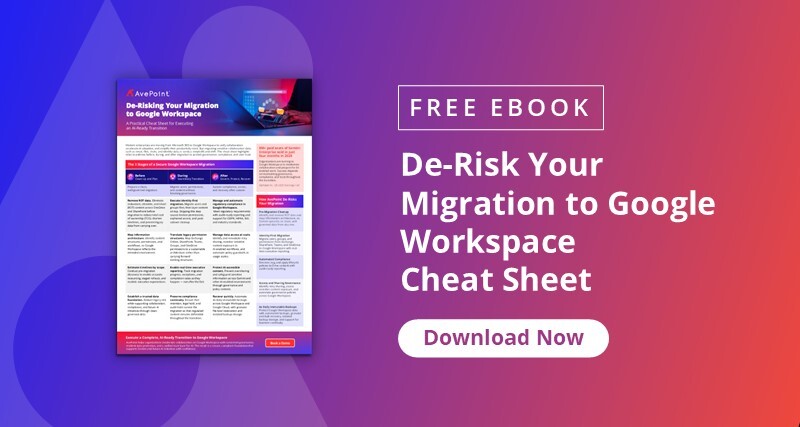
What Data Should You Leave Behind Before Moving to an AI Environment?
Large migrations tend to focus on what can move; preparing for AI requires a closer look at what should.
Organizations that identify information that still provides business value, revisit outdated permissions, and address stale, duplicated, or poorly governed content before carrying it forward will set themselves up for an AI-ready foundation.
This matters because AI changes how organizations interact with their information. A file buried in a repository may once have been difficult for an employee to discover.
AI surfaces everything organizations have accumulated, whether valuable or otherwise.
This is why data readiness is a key pillar of AI trust. For AI to become part of important business processes, organizations need more than confidence in the model.
Does AI Governance Require a Single-Platform Environment?
Modernizing around Google Workspace doesn't mean that every application, repository, workload, or AI tool will eventually live in a single ecosystem.
Google's own approach recognizes that agencies already operate complex technology environments. Gemini for government services is designed to connect with existing case management, ERP, and collaboration systems.
An agency can therefore create more unified business context while continuing to operate across multiple technology environments. For AI governance, the important question is what agents can reach and do across those environments. Yet governance is still catching up with those capabilities. Only one in five companies have a mature model for governance of autonomous AI agents, according to Deloitte.
An agent may operate on one platform while connecting to information or tools elsewhere. Agencies need unified visibility across those connections and one enforceable policy framework governing every data interaction and AI interaction.
That's also why AvePoint's approach to AI Trust spans different clouds, models, and AI providers. Governance needs to account for where information and AI actually operate, rather than assume everything will eventually sit within a single ecosystem.
Why Isn't Data Readiness Enough for AI Trust?
Data readiness is the starting point for AI trust, but it is not the finish line. Once agents begin applying the information they’ve inherited, trust becomes the measure of control. Agencies need visibility into which agents operate in their environment, the data they can access, and the rules that guide their actions. Among organizations reporting the highest confidence in their ability to prevent unauthorized data access, 62% still experienced at least one AI-related unauthorized access incident in the past year.
True trust also means preparedness for the unexpected. If an agent produces an unintended result, agencies must be able to trace what happened, verify compliance, and restore systems quickly.
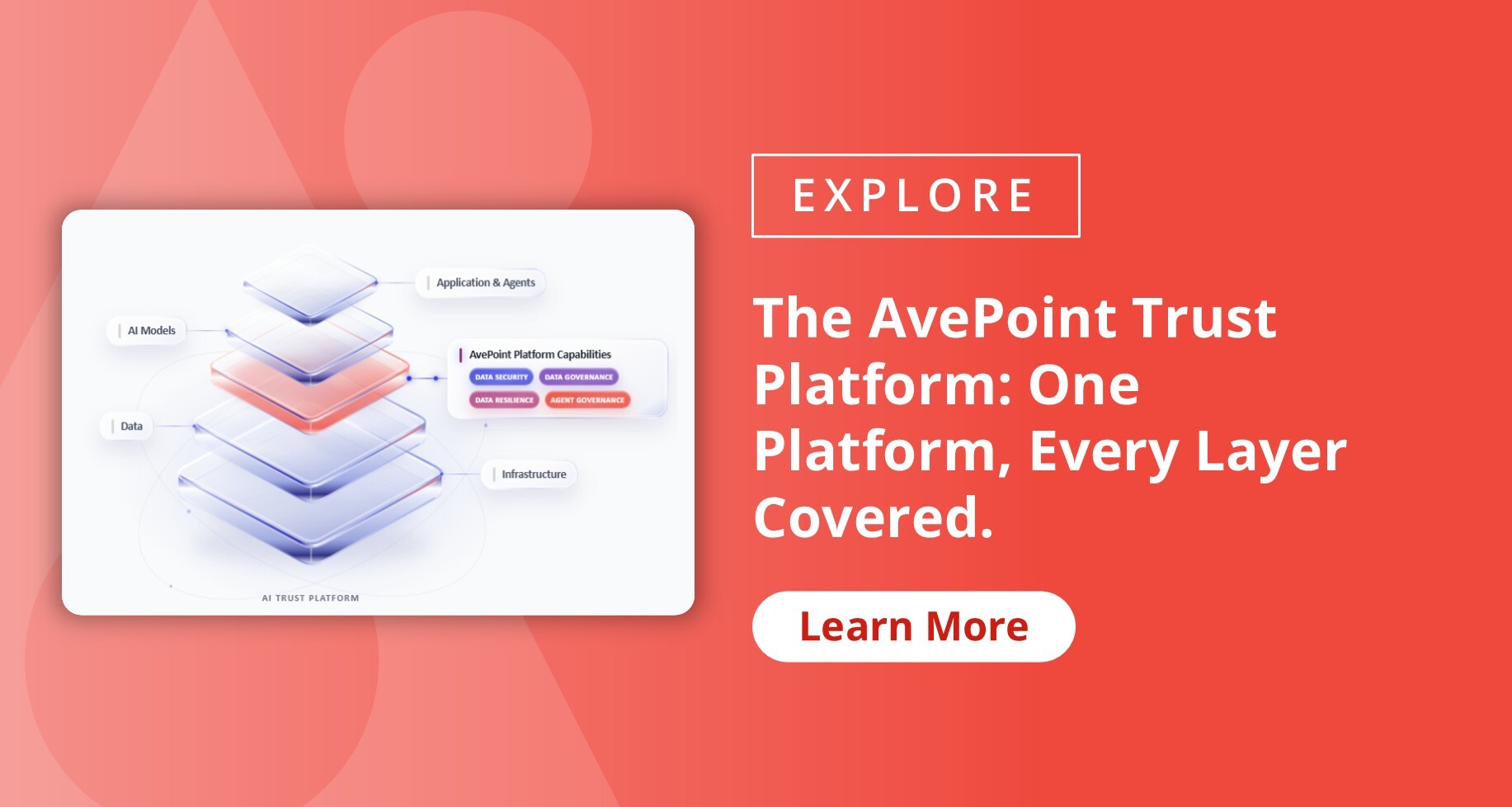
At AvePoint, AI Trust is built on governed data foundations and least-privilege access – reinforced by enforceable policies, audit-ready evidence, and guaranteed recoverability – so agencies can operationalize AI confidently across teams and platforms.
For public-sector organizations, these are practical requirements for putting AI into real workflows. Trust isn't simply confidence that an agent will behave as expected. Organizations need to be able to show that the right safeguards are in place when AI becomes part of the mission.
The Real Moonshot Is AI We Can Trust
Public sector innovation isn’t the issue; dependability is. Agencies are already experimenting with agents and looking for ways to apply AI to government services. The harder work is making those capabilities dependable enough for everyday use.
Some of that work begins before an agent is deployed. Decisions made during modernization about what information to keep, who can access it, and how it's governed will shape the environment AI inherits.
The work continues as agents become more capable. Organizations need visibility into what their AI can access and do, policies that keep pace with that activity, and a way to respond when outcomes aren't what was intended.
Google's “Where Mission Meets Moonshot” theme captures the scale of the opportunity ahead, but success will depend not only on what AI can do but also on the information, access, and governance decisions organizations make regarding it. Those decisions may not carry the spotlight of the moonshot, but they're exactly what make the mission sustainable.

Ava Ragonese is a Product Marketing Manager at AvePoint, leading the GTM of data security solutions for Google Workspace and Cloud. She helps organizations focus on quality data and insights to drive innovation and how multi-cloud collaboration can impact businesses. Ava has a M.Eng. in Systems Analytics from Stevens Institute of Technology and enjoys bringing her technical acumen to complex business decisions such as AI adoption.