

AI infrastructure cost management is the practice of tracking and controlling spend on the compute, storage, and data an organization uses to run AI workloads across every cloud it operates in. Compute and GPU capacity drive visible costs, but redundant, inactive, and poorly governed data can also increase storage requirements and the resources needed to index, retrieve, and process information for AI workloads.
Key Takeaways
- AI infrastructure cost management ties compute, storage, and data spend to real usage and value. It applies FinOps-style visibility and governance to the infrastructure layer itself, not just the model or agent layer most AI cost conversations start with.
- AI infrastructure spending is growing faster than most budgets can absorb. IDC projects AI infrastructure spend will reach $497 billion in 2026, about 53% year-over-year growth, and surpass $1 trillion by 2029.
- Compute is only half the bill. Gartner projects that by 2027, IT spending focused on multistructured data management will account for 40% of total IT spend on data management technologies and services. Managing the growing data layer matters alongside compute because AI workloads depend on the data organizations store and maintain.
- AI agents are adding a new dimension to IT complexity. Gartner predicts that by 2028, an average Fortune 500 enterprise will have more than 150,000 AI agents in use. As agent adoption grows, organizations will need to account for the infrastructure and data resources their AI workloads require.
- Microsoft 365 Copilot's license is predictable. The AI workloads built on top of it are not. Organizations that only track the per-seat Copilot license miss the custom agents, storage growth, and inference spikes those workloads add underneath it.
- Visibility has to mean tagging, allocation, and usage tracking, not a monthly invoice review. Without it, no one can say which team, workload, or agent drove a cost spike until after it already happened.
- Reducing AI infrastructure costs without cutting capability starts with the data layer. Archiving or defensibly disposing of inactive data shrinks storage and compute footprint together, before rightsizing or license consolidation even enter the picture.
What Is AI Infrastructure Cost Management?
AI infrastructure cost management is the discipline of tracking, allocating, and optimizing spend on the compute, storage, and data resources that power AI workloads across every cloud an organization runs. It extends traditional cloud FinOps beyond compute and GPU capacity to include the data layer that feeds and stores those workloads.
The term builds on cloud FinOps, the practice of tying cloud spend to business value, but AI workloads break the assumptions FinOps was originally built around. A GPU cluster training a model or an inference endpoint serving a chatbot does not scale like a virtual machine that is provisioned once and billed predictably. It scales with usage, model size, and how much data has to move through it, across whichever mix of Azure, AWS, Google Cloud infrastructure an organization actually runs.
Consider an enterprise running an agent that answers customer questions from a document library spread across SharePoint, Google Drive, and an Azure data lake. The agent's compute cost scales with query volume. Its storage cost, along with the compute needed to index and retrieve from that storage, scales with how much of the document library is duplicate, outdated, or never accessed. A compute-only view of the bill misses that second, quieter cost driver entirely.
Why Are AI Infrastructure Costs Growing Faster Than Budgets?
AI infrastructure costs are growing faster than budgets because compute demand, model complexity, and data volume are increasing at the same time, while many cost-management processes were built for more predictable cloud spending. IDC projects AI infrastructure spend will reach $497 billion in 2026 and surpass $1 trillion by 2029.
For organizations, that growth can show up in everyday decisions that are difficult to predict during annual budgeting. A team rolls out a new AI use case, usage grows faster than expected, or a more capable model requires additional compute. At the same time, the workload may rely on growing volumes of data spread across cloud and SaaS environments. What started as one AI investment can create infrastructure requirements across compute, storage, and data.
Two forces sit underneath much of that pressure: rising compute demand and a growing data layer. Understanding both gives organizations a more complete picture of what is driving AI infrastructure costs.
Why Is Compute and GPU Demand Growing So Fast?
Compute and GPU demand is growing fast because AI workloads consume resources in proportion to usage and model complexity. This is not a fixed provisioned capacity IT can plan around in advance. Every additional query, every larger model, and every new agent adds directly to the compute bill.
Gartner projects that 50% of cloud compute resources will be devoted to AI workloads by 2029, up from less than 10% at the time of its forecast. As AI takes up a larger share of cloud resources, organizations need a clearer view of which workloads are driving that demand and whether the infrastructure supporting them continues to deliver value. That 50% of cloud compute resources will be devoted to AI workloads by 2029, up from less than 10% at the time of its forecast. As AI takes up a larger share of cloud resources, organizations need a clearer view of which workloads are driving that demand and whether the infrastructure supporting them continues to deliver value.
That creates a difficult balancing act for technology leaders. About 52% of respondents to the 2026 Gartner CIO and Technology Executive Survey say reducing costs will become an even more important objective over the next two years. Organizations are being asked to control technology costs while continuing to invest in AI.
A model upgrade that improves accuracy by a few points can double inference cost overnight, without a single new user or workload being added. That is the part of AI infrastructure cost most organizations already watch closely, because it is the part that shows up first, on the cloud invoice, in dollars.
How Does the Data Layer Affect AI Infrastructure Costs?
The data layer inflates AI infrastructure costs because every duplicate file, abandoned workspace, and ungoverned dataset an AI workload has to store, index, or search through adds both storage cost and the compute required to process it. Redundant data does not sit quietly on a shelf, it gets scanned, embedded, and retrieved every time an agent runs.
By 2027, Gartner projects multistructured data management will account for 40% of total IT spend on data management technologies and services. Multistructured data management brings together the different types of information AI workloads may depend on, including structured data such as customer and transaction records, semistructured data such as application events and JSON files, and unstructured data such as documents, messages, presentations, images, and recordings.
Consider a customer-support AI agent. It might use structured customer and transaction records from a database, semistructured application or support-ticket data, and unstructured product documentation and customer communications stored across SharePoint or Google Drive. Supporting that agent means managing these different data types together so the right information can be available to the workload.
When those environments also contain duplicate documents, outdated content, abandoned workspaces, or poorly governed data, organizations have more information and infrastructure to store and manage. Looking at the data layer alongside compute gives technology leaders a clearer view of the resources supporting an AI workload and where opportunities to optimize may exist.
How Do You Build Visibility Into AI Infrastructure Spend and Reduce Costs?
Organizations can reduce AI infrastructure costs without immediately cutting capability by first building visibility into the workloads and resources driving spend. That means inventorying AI and cloud resources, assigning ownership, connecting usage to costs, and identifying inactive or unnecessary resources before deciding where to optimize.
Organizations can reduce AI infrastructure costs without immediately cutting capability by first building visibility into the workloads and resources driving spend. That means inventorying AI and cloud resources, assigning ownership, connecting usage to costs, and identifying inactive or unnecessary resources before deciding where to optimize.
- Build a multicloud inventory. Create a common view of the AI workloads, cloud infrastructure, storage, and data resources supporting the organization’s AI environment. Visibility into what exists, where it runs, and who owns it provides the foundation for identifying resources that may no longer be needed.
- Tag resources by owner, workload, and environment. Clear ownership and business context make it easier to understand which teams and use cases are responsible for infrastructure spending and investigate costs as they change.
- Allocate shared infrastructure costs to the team or project that’s driving them. A shared data lake or GPU cluster may support several teams or workloads. Connecting costs to actual usage provides a clearer picture of what is driving spend than treating every team as an equal consumer.
- Track usage continuously. AI infrastructure requirements can change when usage, models, agents, or workloads change. Monitoring those shifts gives teams an opportunity to investigate unexpected cost increases before they become recurring expenses.
- Review data and compute together. Look at the data supporting an AI workload alongside the compute resources it consumes. This can reveal inactive repositories, unnecessary data, or other resources that may be contributing to the overall infrastructure footprint.
- Reduce inactive resources first. Use the inventory and usage data to identify infrastructure, workloads, and data that no longer serve an active business purpose. Retire unused resources where appropriate, while accounting for retention, compliance, recovery, and other business requirements.
- Rightsize compute to actual usage. Match GPU and inference capacity to measured workload demand rather than maintaining unnecessary capacity. Revisit sizing when models, usage patterns, or workloads materially change.
- Review overlapping technology investments. Assess AI and SaaS capabilities across platforms such as Microsoft 365 and Google Workspace to understand where functionality overlaps and which tools best meet each business unit’s requirements.
- Set budget guardrails before scaling. Define ownership, expected usage, cost thresholds, and review points before an AI workload moves into broader production. This gives teams a clearer basis for identifying unexpected changes and deciding when intervention is needed.
What Does This Mean for Microsoft 365, Google Workspace, and SaaS Cost?
For Microsoft 365, Google Workspace, and other SaaS platforms, AI infrastructure cost management involves looking beyond the per-seat license to the data, workspaces, permissions, and connected resources supporting AI use cases. A Copilot or Gemini deployment inherits the cost of every duplicate file and abandoned workspace those platforms already contain.
For an organization rolling out Microsoft 365 Copilot, that means understanding the SharePoint sites, OneDrive content, Teams workspaces, and permissions surrounding the information employees can access. The same principle applies to AI deployments across Google Workspace and other SaaS environments: data quality, access, lifecycle, and ownership become part of the broader operational picture. In both cases, the AI feature's per-seat license is predictable. The compute and storage costs of the data feeding it are not, and they grow every time content sprawl grows.
Consider a 5,000-seat Microsoft 365 environment preparing for a broader Copilot rollout. The licensing investment may be straightforward to calculate, but the organization should also understand the environment supporting adoption. Duplicate content, abandoned workspaces, outdated information, and unclear permissions can create additional governance and management challenges.
Addressing those conditions before and after deployment is therefore not simply a cleanup exercise. It gives organizations greater visibility into the data environment supporting AI and a stronger foundation for managing AI adoption over time.
What Does This Mean for AI Agents?
For AI agents, cost management starts with understanding which agents exist, who owns them, what business purpose they serve, and which models, data sources, integrations, and infrastructure resources support them. An unmanaged agent fleet multiplies both compute and storage cost across every agent nobody has inventoried.
Gartner projects the average Fortune 500 enterprise will manage more than 150,000 AI agents by 2028, up from fewer than 15 in 2025. Each of those agents needs somewhere to store its context, memory, and retrieved data, and somewhere to run its inference. As agent adoption increases, organizations need visibility into which agents are active, who is responsible for them, what resources they use, and whether they continue to deliver business value.
The agents that are hardest to manage are often the ones created quickly for a specific use case. A team might build a support agent using a document library that has not been reviewed in years. If that repository contains outdated content, duplicate files, unclear permissions, or information that no longer serves the workload, the organization has a larger data and governance environment to manage alongside the agent.
That makes inventory and ownership essential to cost management. Before deploying more agents, organizations need a way to understand what already exists, which resources those agents depend on, and which agents should remain active as their AI estate grows.
Best Practices for Sustainable AI Infrastructure Cost Management
Sustainable AI infrastructure cost management connects cost visibility, resource ownership, data lifecycle management, and AI governance rather than treating them as separate reviews. Organizations need a repeatable way to evaluate AI workloads and the resources supporting them as usage changes.
- Review cost and data governance together, on the same cadence, not in separate meetings run by separate teams.
- Set a standing data-reduction schedule, not a one-time cleanup project that quietly lapses after the first pass.
- Revisit compute rightsizing every time a model, workload, or usage pattern changes materially, rather than on a fixed annual schedule that misses fast-moving AI usage.
- Review AI license overlap across Microsoft 365, Google Workspace, and other SaaS platforms regularly rather than waiting until renewal to identify potentially overlapping investments.
- Treat every new agent or workload as a budget decision before launch, with a guardrail set in advance rather than a postmortem after the invoice arrives.
Optimize AI Spend and the Data Behind It with AvePoint
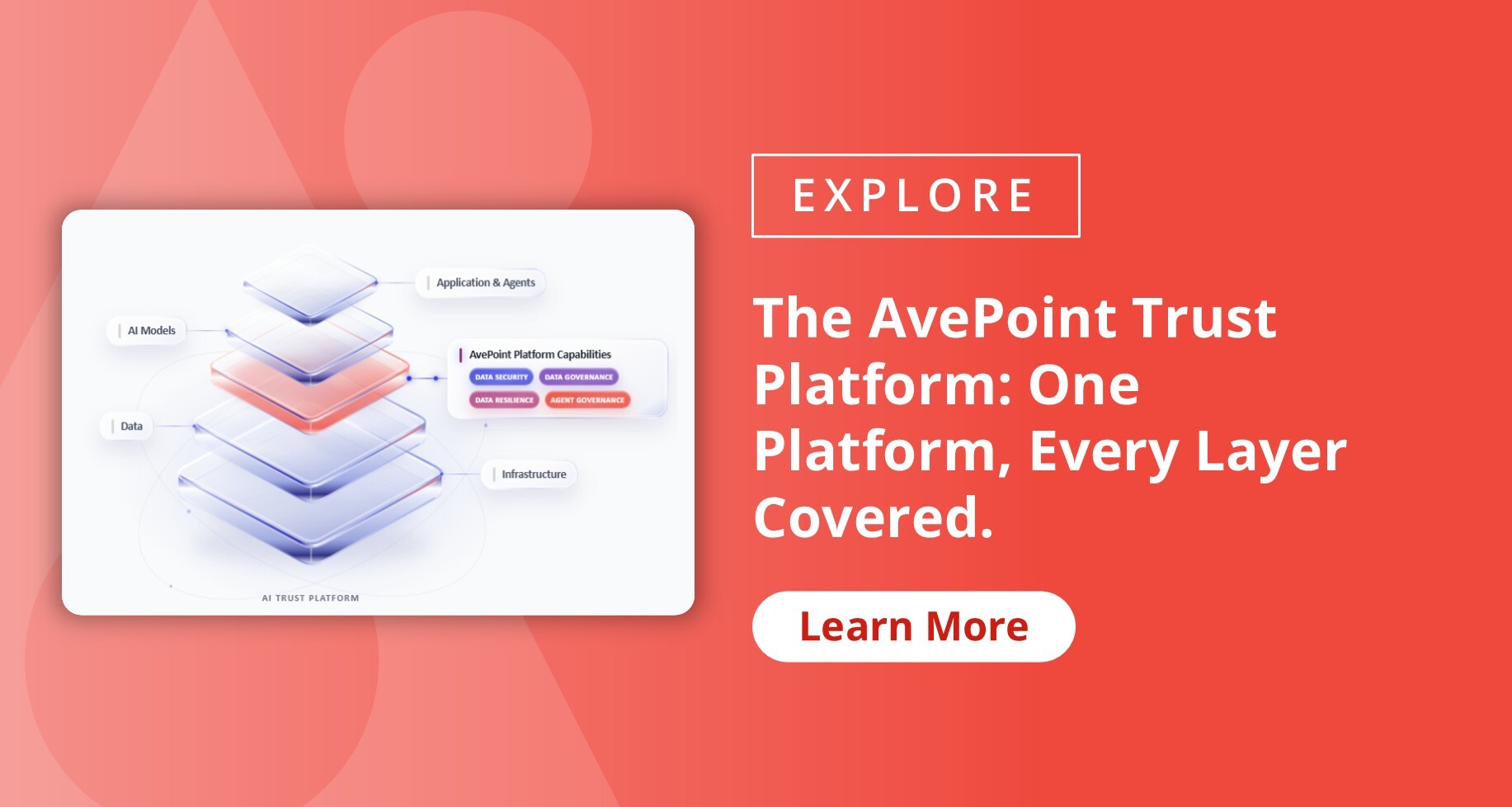
The AI cost optimization capabilities of the AvePoint Trust Platform bring AI spend, usage, and adoption data together, so IT and finance teams have greater context to evaluate their AI investments. Structured AI budget requests give managers usage and ROI context to inform funding decisions. Meanwhile, targeted AI adoption coaching and nudges help address low utilization and get more value from licensed AI tools.
AvePoint also helps organizations address another contributor to cost: the data they continue to retain. Redundant, obsolete, and trivial (ROT) data can increase storage costs and leave organizations managing more information than they need. Through automated data minimization, archiving, retention, and defensible disposal, AvePoint helps reduce that unnecessary data footprint and move appropriate content to lower-cost storage.
Together, these capabilities help organizations make more informed AI spending decisions while addressing the data footprint that supports their AI investments.
Frequently Asked Questions
What is the difference between AI infrastructure cost management and AI FinOps?
AI infrastructure cost management focuses specifically on the compute, storage, and data resources supporting AI workloads, while AI FinOps is the broader practice of applying financial accountability to all AI-related spending, which may include models, licenses, and agent costs. The two overlap heavily, but infrastructure cost management focuses more specifically on the resources required to operate AI workloads.
What is a good benchmark for AI infrastructure spend as a percentage of IT budget?
There is no single universal benchmark. Organizations can track AI infrastructure spending separately from general cloud spending so leadership has greater visibility into how it changes over time. A more useful signal than a fixed percentage is whether infrastructure spending is growing in proportion to the workloads and business outcomes it supports. If spending increases without a clear connection to usage or value, that is a signal to investigate.
How does inactive data affect AI infrastructure costs?
Inactive data creates an ongoing storage and management requirement. When that data is connected to an AI workload, it may also add indexing, retrieval, processing, backup, or governance requirements depending on how the workload is designed. For example, a retrieval-augmented generation agent connected to a repository containing duplicate or outdated files may have more content to manage and search than the use case requires. Reviewing data lifecycle alongside infrastructure usage can help organizations identify content that should remain active, be archived, or be defensibly disposed of.
What does AI infrastructure cost management mean for Microsoft 365 Copilot specifically?
For Microsoft 365 Copilot, cost management means looking beyond the per-seat license to the broader data and governance environment supporting deployment. Organizations should understand the SharePoint sites, OneDrive content, Teams workspaces, permissions, and lifecycle practices surrounding the information employees can access. Reviewing redundant content, abandoned workspaces, outdated information, and unclear permissions can help establish a more controlled foundation for Copilot adoption.
How do AI agents affect infrastructure cost specifically?
AI agents can add infrastructure requirements through the models, data sources, integrations, storage, and compute resources they use. The cost of an agent depends on factors such as model choice, usage volume, workload design, and the systems and data it connects to. As organizations deploy more agents, maintaining an inventory and assigning clear ownership can help teams understand which resources agents use, which remain active, and whether they continue to deliver business value.
How often should organizations review AI infrastructure cost allocation?
The appropriate review cadence depends on how quickly an organization's AI environment changes. Teams should monitor usage and cost changes regularly and revisit allocation after material changes to models, agents, workloads, integrations, or usage patterns. Formal budget reviews can happen on a defined cadence, but cost visibility should not depend solely on quarterly or annual reviews.
What is the difference between multicloud cost management and single-cloud FinOps?
Multicloud cost management has to reconcile spending, resource tagging, ownership, and governance across providers that do not share a common billing model or usage dashboard, while single-cloud FinOps optimizes within one provider's existing tools and structure. Because providers use different services, pricing models, and billing structures, organizations operating across multiple clouds need a consistent allocation approach to understand costs across their broader environment.
What tools help manage costs across multiple clouds?
Organizations may use a combination of native cloud-provider dashboards, FinOps platforms, cloud-management tools, resource inventories, data-governance solutions, and SaaS management tools to understand costs across their environments. The right combination depends on the organization's cloud architecture and operating model. Regardless of the tools selected, consistent ownership, tagging, cost allocation, and lifecycle practices help teams understand which workloads and resources are driving spending.
Related Questions
→ What is AI FinOps?
→ What is AI agent sprawl, and how do you stop it?
→ What is cloud cost optimization, and how does it differ from AI cost optimization?
→ What is data lifecycle management, and why does it matter for AI?

Ava Ragonese is a Product Marketing Manager at AvePoint, leading the GTM of data security solutions for Google Workspace and Cloud. She helps organizations focus on quality data and insights to drive innovation and how multi-cloud collaboration can impact businesses. Ava has a M.Eng. in Systems Analytics from Stevens Institute of Technology and enjoys bringing her technical acumen to complex business decisions such as AI adoption.