How to Build a Disaster Recovery Strategy
Get the 5-step framework for mapping shared responsibility, closing backup gaps, and recovering your business, not just your data.
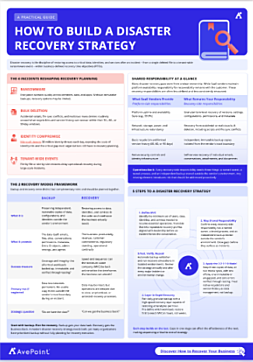
Cheat Sheet
How to Build a Disaster Recovery Strategy
Microsoft detects 38 million identity threats every day, and most disaster recovery plans still don't account for the scale of that risk.
What's Inside
This cheat sheet breaks down disaster recovery into a clear, actionable structure:
- The four incidents reshaping recovery planning: Identify how ransomware, bulk deletion, identity compromise, and tenant-wide events shape the demands on your recovery plan.
- A shared responsibility map: Clarify which protections SaaS vendors provide and which backup and recovery responsibilities remain yours.
- A backup-versus-recovery framework: Distinguish the two recovery modes every strategy needs and determine when one is in place but not the other.
- A five-step planning sequence: Start from defining your minimum viable company (MVC) to testing, verifying, and repeating the process.
What You'll Learn
- Identify the four incident types most likely to disrupt operations, and how a modern strategy plans for each.
- Map ownership across backup and recovery so that no responsibility or gap goes unaddressed.
- Apply the 3-2-1-1-0 backup model and layer in rapid recovery to restore at the speed the business needs.
- Implement a five-step sequence that moves you from protecting data to restoring operations with confidence.
Build a Disaster Recovery Strategy That Gets the Business Back
Backup gets your data back; recovery gets the business back — a modern disaster recovery strategy needs both. AvePoint’s cheat sheet gives IT and security leaders the shared responsibility map, framework, and five-step sequence to close the gaps before the next incident does.
Frequently Asked Questions
What is a disaster recovery strategy?
A disaster recovery strategy is a plan for restoring access to critical data, identities, and services after an incident. That incident could be a single deleted file or a ransomware attack across the whole tenant. A strong strategy brings operations back within the recovery time objectives (RTOs) the business has set.
What incidents should a disaster recovery strategy plan for?
Modern recovery planning should cover four incident types: ransomware, bulk deletion, identity compromise, and tenant-wide events. Each one puts different demands on a recovery plan, and many plans only address some of them.
Is backup enough for disaster recovery?
No. Backup gets your data back, but recovery gets the business back, and a modern disaster recovery strategy needs both. Many organizations have invested in backup without fully planning how they’ll restore operations, which leaves gaps that often show up only during an incident.
More Similar Resources to Explore



Package, Scale, Grow: Introducing the New AvePoint Elements MSP Packages
Nov 24, 2026