

Key Takeaways
- Data protection is broader than data security because it includes availability, recovery, lifecycle management, and accountability.
- Strong programs combine policy, technology, process, and user behavior controls instead of relying on one tool or one team.
- Modern strategies must cover cloud, SaaS, endpoints, third parties, and AI-driven data exposure.
- Backups matter, but backup alone is not a complete data protection strategy.
Data protection has moved from a back-office IT concern to a core business priority. Organizations rely on data to serve customers, support employees, guide decisions, and meet regulatory obligations. That means the real goal is not only to keep data from being exposed, but also to keep it accurate, accessible, and recoverable when something goes wrong.
What is Data Protection?
Data protection is the practice of safeguarding data throughout its lifecycle, so it remains confidential, accurate, available, and recoverable. In practical terms, it covers the policies, controls, and operating processes that help organizations prevent misuse, reduce loss, restore information quickly, and handle data responsibly. It applies to structured and unstructured information, from customer records and financial data to collaboration content, emails, backups, and sensitive operational files.
What Types of Data Need Protection
Most organizations need to protect several categories of data at once: personal data, regulated data, confidential business data, intellectual property, operational records, and backup data. Each category carries different risks. A payroll file, a contract repository, a patient record, and a SaaS backup may all require different controls, but each still belongs in the broader data protection program.
Data Protection is More Than Security
A clear definition prevents a common mistake: treating data protection as a synonym for security tooling. Protection includes prevention, but it also includes recovery, retention, and accountability. That broader view helps leaders make better decisions about ownership, budget, and priorities.
Data Protection vs. Data Security vs. Data Privacy
These terms are closely related, but they are not interchangeable. Data security focuses on defending information from unauthorized access, misuse, or theft. Data privacy defines how personal data is collected, used, shared, and governed. Data protection takes a broader view by bringing security and privacy together with resilience, recovery, retention, and lifecycle controls.
In summary: data privacy defines the rules, data security enforces access, and data protection helps ensure data stays safe, usable, compliant, and recoverable across its lifecycle.
Why Data Protection is Important
Supporting Business Continuity
When critical data is unavailable, business slows or stops. Orders stall, service teams lose context; finance teams cannot reconcile records, and employees work around missing information in risky ways. Data protection supports continuity by reducing downtime and giving organizations reliable paths to restore what they need.
Reducing Operational and Legal Risk
The impact of weak protection is not limited to breaches. Organizations also face accidental deletion, corruption, oversharing, ransomware, insider misuse, and regulatory exposure. A mature program lowers the chance of these events and reduces the damage when they occur by making responsibilities, safeguards, and recovery paths clear.
The financial implications are significant. The Cost of a Data Breach Report 2025 shows that the average global cost of a data breach reached approximately $4.4 million, highlighting how quickly gaps in data protection can translate into business impact. This trend underscores the importance of faster detection, containment, and recovery as core parts of any modern data protection strategy.
Reinforcing Trust
Customers, employees, and partners expect organizations to handle data carefully. Strong protection helps reinforce that trust because it shows the business can manage sensitive information responsibly, respond to incidents, and maintain service under pressure.
The Main Principles of Data Protection
Availability and Recoverability
Protected data must be available when people need it and recoverable when systems fail; files are deleted, or malicious activity occurs. That is why recovery readiness matters just as much as backup frequency. Organizations should know what data is critical, how quickly it must be restored, and what level of loss is acceptable.
Integrity and Accountability
Data is only valuable if it is trustworthy. Integrity means information is complete, accurate, and protected from unauthorized or accidental change. Accountability means organizations can show who accessed data, what changed, and whether policy was followed. Logging, version history, approvals, and audit trails all support this principle.
Least Privilege and Lifecycle Discipline
Users, admins, apps, and AI systems should only access the data they need for the time they need it. At the same time, organizations should collect data deliberately, retain it based on clear rules, and dispose of it defensibly when it is no longer needed.
What a Modern Data Protection Strategy Includes
Discovery, Inventory, and Classification
Organizations cannot protect what they cannot find. Modern strategies start with discovery: identifying what data exists, where it lives, who owns it, how sensitive it is, and how it moves. Classification gives the program structure by separating high-risk data from lower-risk content and guiding which controls should apply.
Risk-Based Controls Across Environments
Data no longer lives in one place. It sits across on-premises systems, cloud infrastructure, SaaS platforms, endpoints, and partner environments. A strong strategy applies controls based on risk, not location alone. That means aligning access, encryption, monitoring, backup, and retention to the sensitivity and business value of the data involved.
Governance, Testing, and Continuous Improvement
Policy without enforcement is weak, and tooling without governance is inconsistent. The strongest programs define ownership, document standards, test recovery, review incidents, and adjust controls as the business changes.
Types of Data Protection Controls and Technologies
Identity, Access, and Encryption Controls
Core controls start with identity. Multifactor authentication, role-based access, privileged access management, and conditional access help limit who can reach sensitive information. Encryption, tokenization, masking, and key management protect data at rest and in motion, reducing exposure if systems or accounts are compromised.
Backup, Recovery, and Resilience Controls
Backups, snapshots, replication, versioning, and immutable copies help organizations recover from deletion, corruption, outages, and ransomware. These controls should be tested regularly. A backup that has never been validated is only a promise. Recovery plans should identify which systems matter most, where clean copies live, and how restoration will be handled.
Monitoring, DLP, and Lifecycle Controls
Data loss prevention, anomaly detection, audit logs, and user behavior analytics help organizations detect misuse or risky movement of data. Archiving, legal hold, retention scheduling, and secure erasure support the lifecycle side of protection by making sure information is retained appropriately and deleted defensibly.

5 Strategies to Initiate Disaster Recovery Planning for MSPs
A free guide for MSPs to learn how to talk to their customers about investing in disaster recovery to better prepare for worst-case scenarios.

Data Protection Across the Data Lifecycle
Collect and Store Data Carefully
Protection starts early. Organizations should collect only what they need, explain why they need it, and classify it as soon as possible. Once stored, that data should be protected with access controls, encryption, segmentation, and backup policies that reflect its sensitivity and business value.
Use, Share, and Move Data Securely
Data becomes most exposed when it is used collaboratively or transferred across systems, regions, and vendors. Secure sharing practices, expiration controls, access reviews, and safeguards for data in transit help reduce that risk. Third-party handling should be documented and governed, especially when service providers process sensitive or regulated content.
Retain and Dispose of Data with Purpose
Retaining everything forever raises cost and risk. A lifecycle-aware program defines retention periods, legal hold requirements, and deletion workflows, so organizations can keep what they need without creating unnecessary exposure.
AvePoint Opus
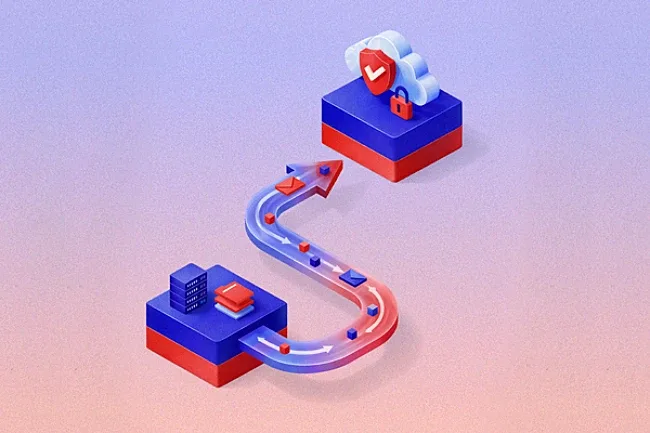
Powered by advanced AI, AvePoint Opus is the next generation of information lifecycle management solutions allowing you to have complete control from creation to archive or defensible disposal, all through a central interface.
Common Data Protection Risks and Threats
Ransomware, Deletion, and Corruption
Ransomware remains a major concern, but it is not the only threat. Malicious encryption, accidental deletion, sync errors, misconfigured automation, and data corruption can all disrupt business. That is why resilient architecture matters: isolated recovery copies, restore testing, and clear incident procedures are as important as preventive controls.
Recovery performance has improved, but it still depends heavily on preparation. In 2025, more than half of organizations were able to recover from ransomware incidents within one week, a notable improvement from the previous year, according to the State of Ransomware 2025 report. This progress reinforces the value of tested backup strategies, faster response capabilities, and well-defined recovery plans.
Misconfigurations, Insiders, and Shadow Data
Many data protection failures come from routine operational gaps. Excessive permissions, public links, stale accounts, unmanaged endpoints, and unsanctioned SaaS tools all create exposure. Shadow data is especially risky because teams may not even know it exists, which makes classification, monitoring, and governance harder.
AI-Related Exposure Is Growing
AI tools and autonomous workflows can amplify existing problems by moving, summarizing or exposing sensitive information faster than traditional processes. As organizations scale AI adoption, agentic AI governance becomes essential to ensure that these workflows remain controlled and auditable.
Organizations should extend access controls, classification and monitoring into AI-enabled workflows rather than treating AI as outside the scope of data protection.
Data Protection for Cloud, SaaS, and Hybrid Environments
Shared Responsibility Is Not Full Protection
Cloud and SaaS providers secure their platforms, but customers are still responsible for how their data is configured, accessed, retained, and recovered. That distinction matters because many organizations assume native availability features are enough when they may not cover every restore scenario, retention need, or compliance obligation.
SaaS Protection Needs Its Own Strategy
Business-critical information now lives in collaboration suites, CRM platforms, ticketing systems, and line-of-business apps. Those environments need protection plans that include backup and restore coverage, visibility into sharing, lifecycle governance, and role-based access controls. One of the fastest ways to reduce risk is to treat SaaS data as production data, not as someone else’s problem.
Hybrid Visibility is a Leadership Issue
The challenge in hybrid environments is not only technical complexity. It is fragmented ownership. Teams may manage cloud, endpoint, SaaS, and on-premises data separately, which can leave real gaps between policies and practice.
Multi-SaaS Backup Solution for Data Protection & Resilience
Protect every SaaS app your business relies on with automated and scalable backup across your entire ecosystem, from identity to code to collaboration.

Data Protection and Compliance
Why Compliance Shapes Data Protection Priorities
Compliance does not replace a protection strategy, but it strongly influences one. Regulations and contractual requirements shape how organizations collect, secure, retain, transfer, and delete data. They also influence documentation, auditability, and response expectations. The practical takeaway is simple: compliance teams and security teams should not work in parallel lanes. They should help define one common standard for sensitive data handling.
Common Requirements Across Frameworks
While laws and standards vary by industry and region, many ask for the same fundamentals: clear ownership, access controls, retention discipline, incident response readiness, evidence of oversight, and protection for regulated data. Organizations that operationalize these fundamentals usually find it easier to adapt as requirements change because they are not starting from scratch each time a new obligation appears.
Audit Readiness as an Ongoing Practice
Strong organizations do not treat audits as one-time exercises. They build repeatable practices that generate evidence continuously, from data classification and access reviews to recovery testing and deletion records. This approach strengthens more than compliance posture. It also gives leadership a clearer view of whether the data protection program is working as intended.
How to Build a Data Protection Framework
Step 1: Identify Critical Data and Business Processes
Start with what keeps the business running. List the processes that cannot tolerate extended downtime — payroll, order processing, customer support, core financial reporting, product delivery, and regulated operations. Then identify the applications and datasets that each process depends on.
Build a simple register that ties each process to its owners, systems, and the data it uses. If no one owns a dataset, it will not stay protected. Prioritize what is mission-critical and what is legally sensitive and plan the rest in phases.
Step 2: Classify Data by Sensitivity and Business Value
Classification turns “protect everything” into a workable plan. Use a small number of labels that teams can understand and apply consistently, such as Public, Internal, Confidential, and Highly Confidential. Add examples for each label, so employees do not guess.
Make classification practical. Map each label to clear rules: who can access it, where it can be stored, whether it must be encrypted, and whether external sharing is allowed. When possible, automate classification using metadata, content patterns, and context signals.
Step 3: Map Where Data Lives, Moves, and Who Can Access It
Data sprawls are a protection problem. Create a data map that covers on-premises systems, cloud infrastructure, SaaS applications, endpoints, and third-party connections. Document where data is created, where it is stored, how it is shared, and which identities can access it.
Pay special attention to collaboration platforms and integrations. Sensitive data often travel through shared workspaces, email, chat, and connected apps. The data map should include service accounts, API tokens, and automation tools, not only human users.
Step 4: Apply Layered Protections Based on Risk
Layered protection reduces risk by combining multiple safeguards instead of depending on a single control. A practical approach is to organize those safeguards into four core layers:
- Identity and access: use strong authentication, least privilege access, and regular access reviews.
- Data controls: apply encryption, data loss prevention policies, and secure sharing rules.
- Detection and response: centralize logging, monitor for unusual access patterns, and alert on risky configuration changes.
- Recovery and resilience: protect recovery copies with isolation and immutability, so attackers cannot delete evidence or backups.
Step 5: Define Recovery Objectives Such as RPO and RTO
Recovery targets keep resilience grounded in business reality. Set targets by process and system, not by instinct. A customer-facing platform might need a short recovery time objective (RTO) and tight recovery point objective (RPO), while an internal archive may not be needed. Once targets are set, backup frequency, replication, and failover approaches should be designed to meet them.
Step 6: Test, Audit, and Continuously Improve
Plans that are not tested become assumptions. Schedule restore tests for critical systems, including the dependencies that make them usable, such as identity, configuration, and permissions. Capture results, fix gaps, and re-test.
Pair testing with routine audits. Review privileged access, external sharing, retention policies, and third-party connections. Track improvements over time and treat data protection like an operating program — a cycle of measure, learn, and harden.
| Step | Key Action | Why It Matters |
|---|---|---|
| 1. Identify Critical Data & Processes | Determine which business operations and data are essential | Prevents blind spots and ensures protection starts where impact is highest |
| 2. Classify Data by Sensitivity | Organize data based on risk and business value | Turns “protect everything” into a scalable, enforceable strategy |
| 3. Map Data Location & Movement | Understand where data lives, flows, and is accessed | Reduces hidden risks from data sprawl and shadow data |
| 4. Apply Layered Protections | Combine multiple security and governance controls | Strengthens defense by avoiding reliance on a single control |
| 5. Define Recovery Objectives (RTO & RPO) | Set business-aligned recovery targets | Ensures resilience plans match real operational needs |
| 6. Test, Audit, and Improve | Continuously validate and refine protections | Converts plans into proven, real-world readiness |
Common Data Protection Mistakes to Avoid
Treating Backup as the Whole Strategy
Backup is essential, but it is only one layer. A program that relies on backup alone often overlooks access control, monitoring, secure sharing, and data minimization. It also risks slow recovery if restore procedures are not tested and documented.
Build defense in depth: prevent unauthorized access, detect risky behavior early, and keep clean recovery options that can be verified under pressure.
Ignoring SaaS and Endpoint Data
Many organizations protect servers and databases but underestimate SaaS and endpoint exposure. Collaboration platforms hold sensitive files, conversations, and shared links. Endpoints store cached files, local exports, and credentials that attackers can exploit.
Include SaaS and endpoints in the inventory, apply consistent access governance, and validate what the provider covers versus what still must be backed up and recovered.
Assuming Compliance Equals Full Protection — And Skipping Tests
Compliance programs are critical, but they can become document-heavy if they are not tied to operational controls. Meeting a requirement on paper does not guarantee that data is protected in daily work.
The most expensive mistake is failing to test recovery and restoration. Run restore tests before they are needed, and include access, permissions, and configuration in the test scope. A “successful backup” does not prove an organization can restore a working service.
How to Measure Effective Data Protection
Coverage Metrics: What is Protected and Governed
Coverage metrics show whether the program applies to the environments the business relies on. Track the percentage of data that is classified, the number of protected workloads, and the number of protected SaaS applications. Monitor how much sensitive data exists outside approved locations.
Coverage also includes ownership. Measure how many critical systems have a named business owner, a technical owner, and documented protection and recovery plans.
Resilience Metrics: Measuring Recovery Performance
Resilience metrics focus on recovery outcomes. Track backup success rate and restore success rate, not just job completion. Measure RPO and RTO performance against targets for critical services.
Include testing frequency and time to complete restores. If testing is rare or slow, treat it as a risk signal. Over time, aim for consistent recovery performance and fewer manual steps.
Risk and Compliance Metrics: Exposure, Control Drift, and Readiness
Risk metrics help you find where exposure is growing. Track exposed records, privileged accounts, policy violations, and third-party risk, including vendor access and risky integrations. Add trends over time so leaders can see whether risk is improving or drifting.
Compliance metrics should be audit-ready: audit findings, retention adherence, and response readiness. Track how quickly you can produce evidence such as access reviews, retention reports, and incident logs. If evidence takes weeks to assemble, the program will not scale.
The Future of Data Protection
From Security Control to Resilience Discipline
Data protection is evolving into a broader resilience function that connects security, governance, compliance, business continuity and responsible data use. Incidents no longer stay in one lane. A failed restore can quickly become a compliance issue, and a governance gap can expose sensitive data.
Organizations that succeed treat data protection as an operating discipline, not a set of tools or isolated controls. They align stakeholders, define ownership, and ensure that protection, recovery, and accountability work together in real-world scenarios.
Automation and Adaptive Enforcement
Automation is reshaping how teams manage data protection at scale. It enables faster classification, more consistent policy enforcement, and earlier detection of risky behavior.
But automation is not about removing human judgment. It is about focusing it where it matters most. By reducing manual effort, teams can spend more time responding to real risk signals, improving controls, and strengthening resilience across the organization.
Adaptive enforcement is the next step. Controls should respond to context — adjusting access, monitoring and protection dynamically based on user behavior, data sensitivity, and risk levels.
Why Trusted Execution Matters Most
The organizations that lead will be the ones that turn policy into consistent, daily execution. They will know where their data lives, control who can access it, validate recovery under pressure, and extend governance to new technologies, including AI and SaaS ecosystems.
In this environment, trust is not assumed — it is proven through visibility, control, and repeatable outcomes.
From Gaps to Operational Confidence
Modern data protection is not just about reducing risk — it is about operating with confidence. Confidence that data is protected, recoverable and governed, even as the environment grows more complex.
This is where many organizations struggle. Tools are fragmented. Visibility is incomplete. Ownership is unclear.
AvePoint helps close that gap by unifying data protection, governance and resilience into a single, operational model. The result is not just protection — it is control, clarity and confidence at scale.
Explore how the AvePoint Confidence Platform can help you turn data protection into a true resilience advantage.
Innovate Securely with Confidence
See risk clearly. Act decisively. Protect data, build AI trust, and drive innovation with the AvePoint Confidence Platform.
Frequently Asked Questions About Data Protection

Grace Harrison is a Product Marketing Manager at AvePoint, Inc., based in Jersey City, NJ. She works in the Product Strategy department, contributing to solutions like AvePoint Cloud Backup, AvePoint Fly, and AvePoint tyGraph. Grace plays a key role in developing marketing strategies and competitive intelligence to support AvePoint's field teams and enhance their selling tools.