

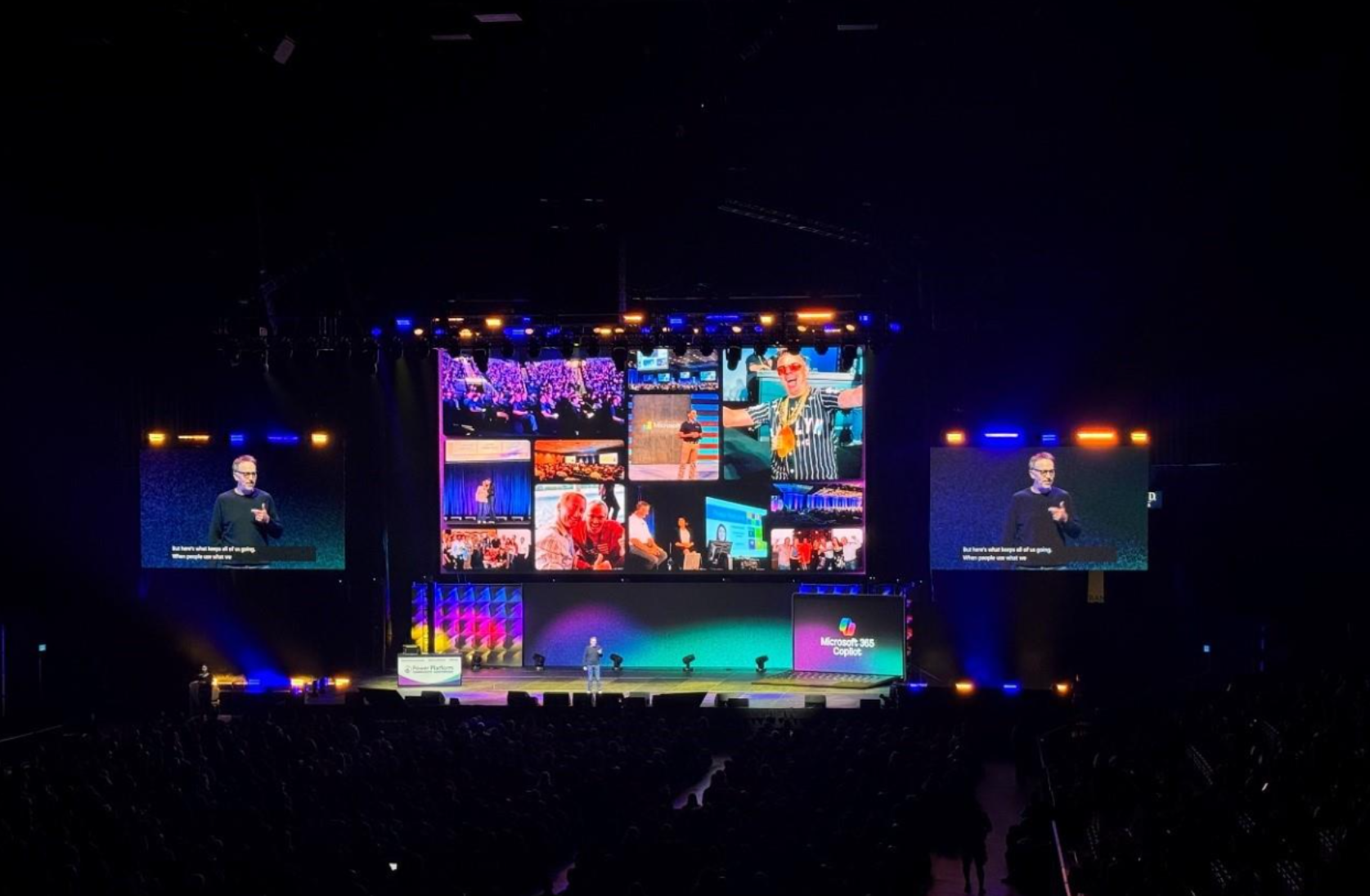
I recently joined thousands of makers, IT professionals, developers, and enterprise leaders at the 2025 Power Platform Conference. Beyond the visionary keynote presentations, Christina Aguilera’s performance, and a fireside chat with Michael Phelps, what made the conference memorable is the overall sense of community being fostered among Power Platform users.
The conference was buzzing with insights on everything — how to create agents, how low-code/no-code is changing the future of work, and how to make the most out of Power Platform investments while staying protected. Below are my observations and takeaways from the conference.
Agentic AI is on the Rise, and There’s No One-Size-Fits-All
Attendees varied in their agentic AI journeys, ranging from exploratory phases focused on understanding how to leverage agentic AI in their organization to having deployed agents and trying to maximize impact. As organizations talked through success cases and failures, it became clear that successful implementation differs across organizations based on factors like size, industry, goals, use cases, and culture. The key is flexibility; Governance frameworks must accommodate diverse approaches while ensuring security and compliance.
Expectations for IT are a Moving Goalpost
IT teams are increasingly tasked with building and scaling AI solutions to meet business expectations, often without firsthand experience of the problem. This shift requires new skills, cross-functional collaboration, and governance frameworks that support both agility and accountability.
Governance Guardrails are Essential
Low-code/no-code empowers creativity, but without proper guardrails, it can expose organizations to compliance violations, data leakage, and cost overruns. Organizations need to think about the way they are going to set up and enable this creation through Power Platform — taking data exposure, compliance violations, cost containment, agent sprawl, and hallucinations into account when building a framework for implementation.

Innovation Gridlock is Real
Many organizations are stuck between the desire to innovate and the need to mitigate risk. Some have spent years trying to deploy a single agent, while others abandon projects after months of effort. Not only does there need to be internal alignment on goals and outcomes, but an overly restrictive governance strategy, low visibility into use cases, and too slow of a rollout may slow creation and adoption.
Governance Must be Dynamic
An organization’s governance needs aren’t static. Security spans identity, access, data protection, threat management, and compliance, and as organizations scale and Power Platform evolves, governance solutions must adapt — supporting innovation while maintaining a strong security posture. Tailored data loss prevention (DLP) policies, continuous monitoring and insights, flexible permissions, and iteration are all essential to pivot as needed.
Focus on Outcomes and Have a Path to Scale
Many organizations know they can benefit from using Power Platform but struggle to determine how to leverage it to get the outcomes they want. Successful organizations start with outcomes in mind, then break this down into components, and assess which Power Platform tool best suits their needs. From there, it’s crucial to have a plan in place for piloting and rolling out. Functionality and purpose should drive development, while a pilot plan and flexible governance should drive scale.
The Power Platform community is thriving, and so is the opportunity to innovate responsibly. At AvePoint, we’re committed to helping organizations build with confidence, enabling secure, scalable, and compliant Power Platform adoption. Governance is the foundation for sustainable innovation, and we’re excited to see what makers will be creating going forward.


Clara Hinchcliffe is a Product Marketing Manager at AvePoint, working on go-to-market strategy for AvePoint’s data security and information lifecycle solutions. With a background in market research, Clara brings a data-driven mindset to product marketing, spearheading initiatives like customer focus groups to ensure product-market fit. In her spare time, Clara enjoys traveling, hiking, and discovering new live music venues.