

As AI and cloud become integral to business operations, we’re seeing a convergence of two essential priorities — innovation and trust. Omdia research shows that 93% of enterprises are using AI applications, and 91% have already deployed specific cybersecurity products or policies governing AI use. However, 75% of organizations also experienced at least one AI-related breach in the past year, primarily due to oversharing sensitive employee or customer data.
As data sprawls across cloud platforms, organizations face a critical challenge: harnessing AI’s transformative power while maintaining the security, compliance, and governance standards that stakeholders demand. They must be ready to answer critical questions from their boards, customers, and regulatory bodies: Where is the data going? Who has access to it? How to ensure compliance with industry regulations and data privacy laws?
Recent AvePoint-commissioned Omdia research confirms that 94% of MSPs indicate a commitment to automation for AI data readiness and compliance, but only 43% report high maturity in delivering AI-ready environments. Organizations that fail to address these concerns don’t just risk compliance penalties; they risk losing the trust that took years to build. This blog covers how managed service providers (MSPs) and channel partners can step in — not just as service providers, but as strategic advisors guiding clients through the complexities of secure cloud and AI adoption.
The Reality: AI Is Here, But Are We Ready?
Today, we operate in an environment where data breaches make headlines daily, regulatory frameworks like GDPR and NIS2 continue to evolve, and AI governance is a priority. When deploying AI solutions like Microsoft Copilot, organizations must establish a foundation for building AI-ready, risk-resilient environments that meet compliance and governance needs.
However, while AI systems are powerful, they can inadvertently surface confidential information if environments aren’t properly secured. About 86% of organizations delayed AI deployments by up to a year due to security and data quality concerns. Most organizations aren’t prepared, with sensitive data scattered across sprawling workspaces, inconsistent access permissions, and legacy configurations ripe for exploitation.
By becoming essential partners in safeguarding client data, MSPs can protect their clients, unlock new revenue streams, and solidify their position as trusted advisors in an AI-driven world.
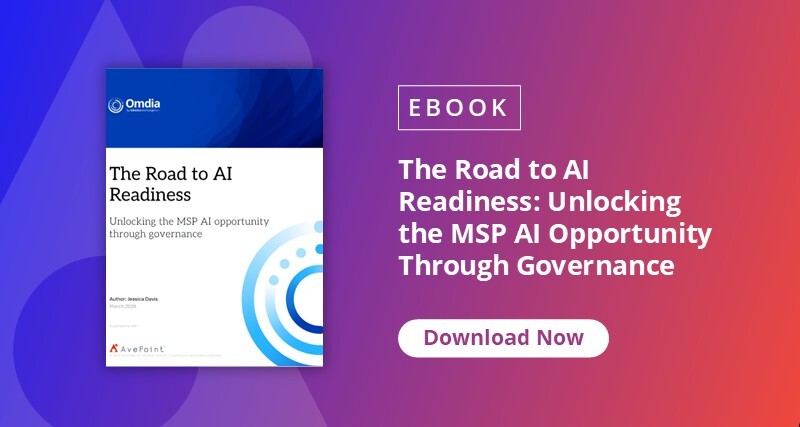
Read this report to help your clients unlock AI opportunities through governance.
Three Pillars of Secure Cloud and AI Readiness
The good news? Building secure, AI-ready environments doesn’t mean sacrificing innovation. It means being strategic about how partners approach deployment, governance, and ongoing management.
1. Managed Services: Continuous Risk Detection and Compliance-as-a-Service
As organizations scale their use of cloud and AI technologies, new risks emerge daily. Permissions drift, shadow IT proliferates, and data sprawl creates blind spots that attackers can exploit.
User and device management secures identities and endpoints across tenants, enforcing zero-trust policies. And by implementing ongoing risk detection and compliance-as-a-service, organizations gain continuous visibility into their security posture. Instead of periodic audits that provide a snapshot in time, modern managed services offer real-time monitoring and automated remediation.
When overshared content is detected, unusual access patterns emerge, or compliance policies are violated, these proactive approaches immediately flag and address issues before they escalate. This not only reduces risk but also significantly decreases the burden on internal IT teams, which are already stretched thin.
2. Security Services: Automated Controls and Audit-Readiness
Microsoft Copilot and similar AI tools are incredibly powerful, but they work by accessing and synthesizing information across the entire digital estate. If that estate isn’t properly secured and governed, you’re potentially giving AI – and by extension, your users – access to sensitive information they shouldn’t see.
Deploying workspace management enforces naming, classifying, and automating lifecycle management, as well as monitoring governance policies at scale. This includes data loss prevention, access controls, sensitivity labeling, and data management, ensuring securities are consistently applied across your entire environment.
Equally important is audit-readiness. When auditors or regulators come calling, you need to demonstrate compliance quickly and comprehensively. Automated reporting capabilities transform what used to be weeks of manual evidence gathering into streamlined, button-click reports that show exactly who accessed what, when, and why. This not only satisfies compliance requirements but also dramatically reduces the time and resources required to support audits.
3. Strategic Advisory: Navigating DSPM and Copilot Readiness
Technology alone doesn’t create secure AI environments — strategy does. Data security posture management (DSPM) represents a fundamental shift in how organizations think about security. Rather than focusing solely on perimeter defense, DSPM emphasizes understanding where your sensitive data lives, who has access to it, and how it’s being used.
Before turning on AI capabilities, you need a clear picture of your data landscape. Where are your most sensitive files? Are permissions properly configured? Have you identified and classified your critical business information?
MSPs and channel partners can help organizations answer these questions and develop a roadmap that aligns AI readiness with compliance and governance needs. This includes gap assessments, policy development, user training strategies, and phased deployment plans that strike a balance between innovation and risk management. Risk and change management detects misconfigurations in real-time and automates remediation.
Practical Implementation: Making It Real
So how can MSPs and channel partners translate these pillars into action? Here are practical approaches we’re seeing to drive success:
- Initial assessment and planning. Conduct data security posture and AI readiness assessments to identify risks and exposures.
- Seamless onboarding and configuration. Deploy AI-ready secured environments, apply configurations, and remove redundant, obsolete, and trivial (ROT) data.
- Active monitoring and risk management. Monitor risks and compliance continuously, act on real-time misconfiguration detection and policy drift alerts.
- Continuous optimization and expansion. Optimize license and storage to support AI adoption; enforce user recertification automation and GDPR/NIS2 compliance backup.
Are You Ready to Lead Secure AI and Cloud Transformations?
Trust isn’t built overnight — it’s earned through consistency, transparency, and security. With AI and cloud firmly established as core to business operations and expanding rapidly, the stakes are higher than ever. A single misconfiguration can lead to data breaches, regulatory fines, or reputational damage.
Partners have a unique opportunity to lead the charge. By offering managed services, security solutions, and strategic advisory, they can help clients navigate the AI landscape with confidence.
Let’s build that trust together.

Kris Blackmon is Partner Marketing Director at AvePoint. She previously worked as head of channel communities at Zift Solutions, chief channel officer at JS Group, and as senior content director at Informa Tech where she was director of the MSP 501 community. In addition, Kris also chairs in CompTIA's Channel Development Advisory Council.